“Timeless” Art: A Construct of Public Memory
By Emory Andrews ’28
Graphics by Katy Su ’28
In 1810, Napoleon Bonaparte commissioned François-Régnault Nitot to create a set of jewelry made of diamonds and emeralds, one of the two parures that he gifted to his wife Marie-Louise, daughter of the emperor of Austria, on their wedding day on the second of April. [1] The necklace in this set was made of 36 emeralds and over a thousand diamonds, but for all of its splendor and beauty, it remained fairly obscure for the 200 years that followed. [2] That was until October 19, 2025, when it was stolen from the Louvre in a brazen daylight robbery that drew international attention and aroused considerable interest in several pieces of art that had been publicly forgotten for so long. [3]
The defining factor in which art pieces last in public memory and are most praised is not the quality of the works themselves, but the circumstances, people, and environments that surround it. When ChatGPT, serving here as a comprehensive and condensed public perspective, is asked to name “timeless” works of art, the first item on its list is, not surprisingly, the famous Mona Lisa. [4] Leonardo da Vinci’s painting is often considered the most famous in the world, an enduring work that transcends cultures. While its craftsmanship and beauty cannot be denied, there are billions of paintings in the world, and da Vinci produced a number of magnificent works other than the Mona Lisa. Its worldwide fame is mainly due to its 1911 theft by Vincenzo Peruggia and its home at the Louvre, the most visited museum in the world. [5, 6]
No art will ever truly be timeless. Humans, being mortal creatures whose life on earth is fleeting, often create lasting works of art that are appreciated generation after generation, but not forever. The oldest forms of human art date back tens of thousands of years, but it is still uncertain if works go back even further. On the island of Borneo, paintings of cattle and hands possibly dating back 50,000 years have been discovered. [7] The reason we have access to paintings like these in the Lubang Jeriji Saléh cave in Borneo are purely circumstance. Without luck and the grace of nature, these works would never have survived this long or been discovered. This does not necessarily make them timeless though.
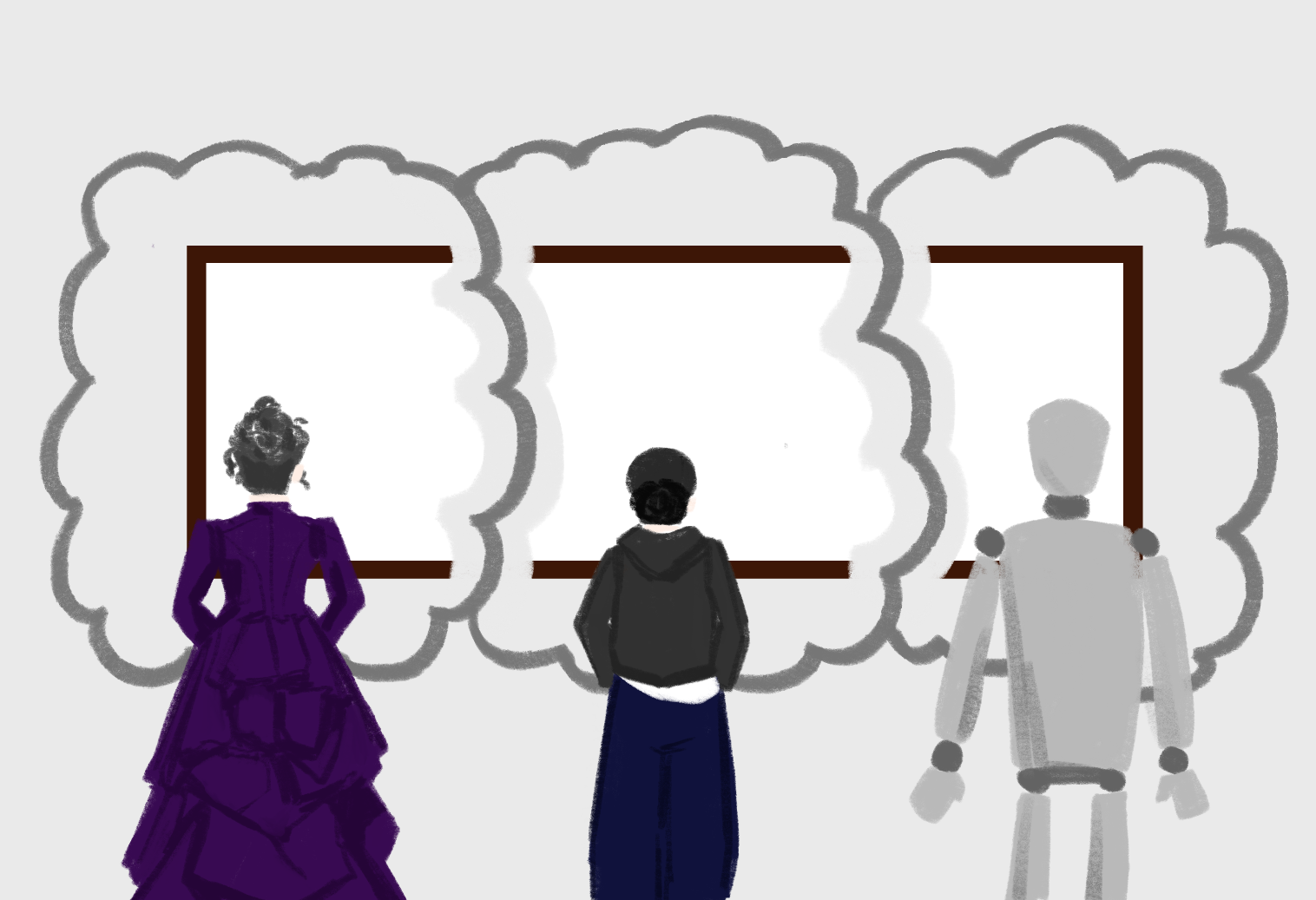
In a more modern sense, a timeless and important piece is one that lasts in public memory. However, public memory of art is influenced by circumstances, people, and environment over actual quality. While those “timeless” pieces are marvels of art themselves, other works are frequently overlooked because they are not created by a famous artist or connected to a famous event. Works are never judged only on the work itself, but on everything around them. A person should look for works that speak to them, regardless of the fame of the artist, the location, or circumstance surrounding it. Don’t limit exposure to only the most famous artists in the most famous museums. To experience art, look beyond public memory, off the beaten path, to the quiet galleries and local studios where hidden jewels are waiting to be reborn and remembered
Footnotes
Jacques Godechot, "Napoleon I," in Encyclopædia Britannica, https://academic.eb.com/levels/collegiate/article/Napoleon-I/108752.
"Collier en émeraudes de la parure de Marie-Louise" [Emerald necklace from Marie-Louise's parure], Louvre Collections, https://collections.louvre.fr/en/ark:/53355/cl010113263.
Ian Aikman and Rachel Hagan, "Everything We Know about the Louvre Jewellery Heist," BBC, last modified October 20, 2025, https://www.bbc.com/news/articles/cg7nrlkg0zxo.
For example, The Annunciation, The Battle of Anghiari, Bacchus, The Burlington House Cartoon, etc.
Isabella Feinstein, "The Mona Lisa: The Woman Behind the Smile," PBS, https://www.pbs.org/kenburns/leonardo-da-vinci/the-mona-lisa.
"The most visited museums in the world," The European Museums Network, https://museums.eu/highlight/details/105664/the-most-visited-museums-in-the-world.
Brian Handwerk, "World's Oldest Known Figurative Paintings Discovered in Borneo Cave," Smithsonian Magazine, November 7, 2018, https://www.smithsonianmag.com/science-nature/worlds-oldest-known-figurative-paintings-discovered-borneo-cave-180970747/.
References
Aikman, Ian, and Rachel Hagan. "Everything We Know about the Louvre Jewellery Heist." BBC. Last modified October 20, 2025. https://www.bbc.com/news/articles/cg7nrlkg0zxo.
"Collier en émeraudes de la parure de Marie-Louise" [Emerald necklace from Marie-Louise's parure]. Louvre Collections. https://collections.louvre.fr/en/ark:/53355/cl010113263.
Feinstein, Isabella. "The Mona Lisa: The Woman Behind the Smile." PBS. https://www.pbs.org/kenburns/leonardo-da-vinci/the-mona-lisa.
Godechot, Jacques. "Napoleon I." In Encyclopædia Britannica. https://academic.eb.com/levels/collegiate/article/Napoleon-I/108752.
Handwerk, Brian. "World's Oldest Known Figurative Paintings Discovered in Borneo Cave." Smithsonian Magazine, November 7, 2018. https://www.smithsonianmag.com/science-nature/worlds-oldest-known-figurative-paintings-discovered-borneo-cave-180970747/.
Marshall, Alex. "See What Was Taken in the Louvre Heist." The New York Times, October 19, 2025. https://www.nytimes.com/2025/10/19/world/europe/louvre-heist-items.html.
"The most visited museums in the world." The European Museums Network. https://museums.eu/highlight/details/105664/the-most-visited-museums-in-the-world.