The Internet Never Forgets: Digital Footprints and Identity
By Claire Kietduriyakul ’26
Graphics by Katy Su ’28
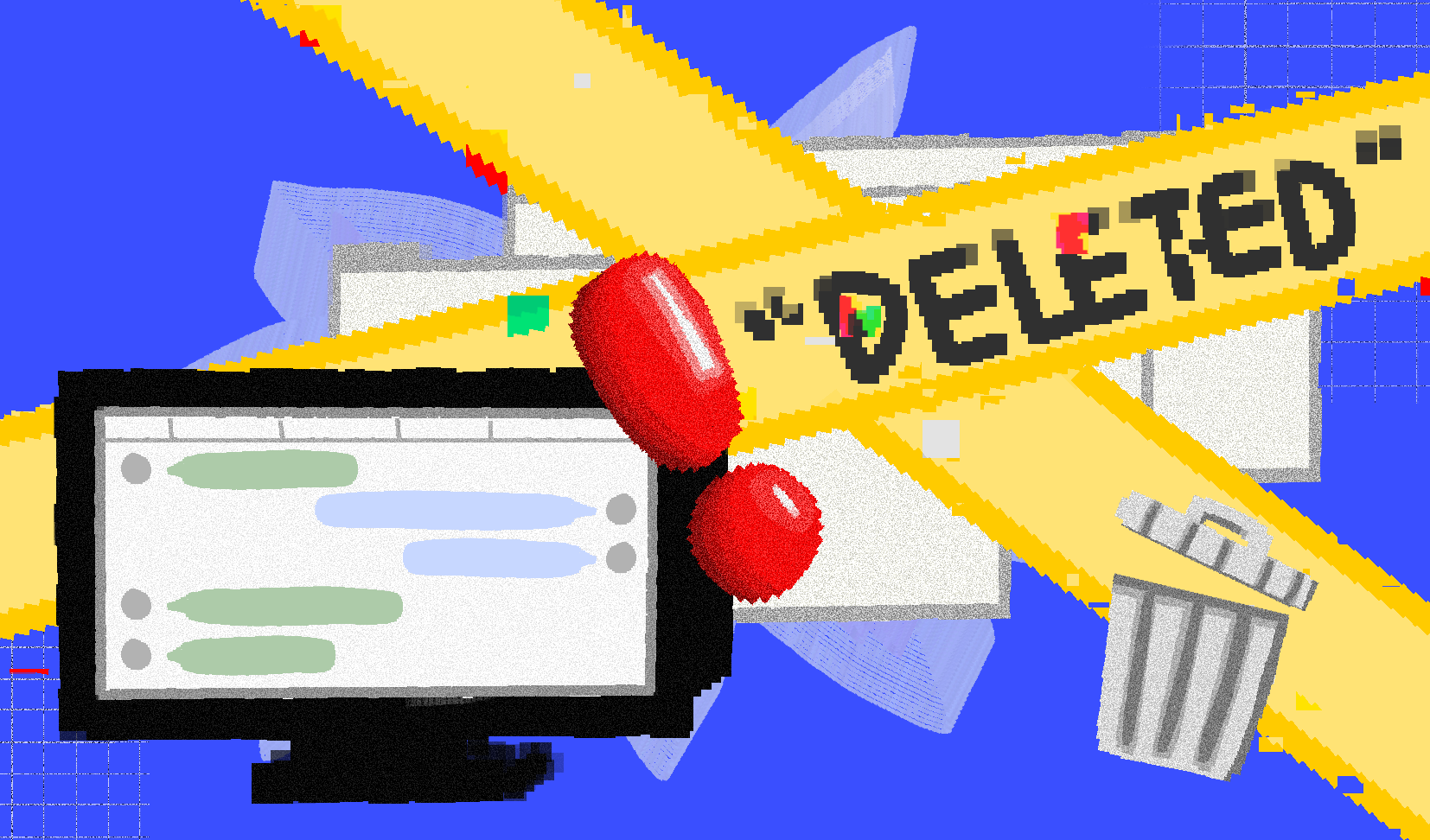
In 2017, Harvard University rescinded ten students’ offers of admission after uncovering offensive memes they had shared in a private Facebook group. [1] What began as a niche disciplinary case became shorthand for a generation learning that the internet never forgets. A decade of posts, likes, reposts, or comments can now decide whether someone is admitted or hired based off of something they form called a digital footprint: an unintentional autobiography that endures long after its owner has changed. As institutions and employers increasingly examine this online record, questions of fairness and privacy grow sharper. Yet for communities built on trust, a person’s digital presence can reveal judgment and integrity more vividly than any application form. Digital footprints capture how individuals behave when they believe no one is watching. A 2018 CareerBuilder survey found that “70 percent of employers use social networking sites to research job candidates,” and more than half have decided not to hire someone because of what they found. [2] For those entrusted with cultivating responsible citizens and credible professionals, ignoring that record would mean overlooking one of the clearest indicators of accountability in the digital age. Therefore, examining online presence reflects due diligence toward the standards of trust that institutions claim to uphold.
Digital footprints now function as signals of reputation, revealing how individuals think and communicate, as well as how their values align with the institutions they hope to join. Employers and admissions officers rarely search online out of curiosity; rather, they do so to determine whether a person’s public persona matches the character their application suggests. Recruiters report rejecting applicants whose posts display intolerance or dishonesty, while advancing those whose online presence reflects initiative and respect. A digital footprint exists as a form of character audit that exposes how people behave when formality disappears.
This culture of verification extends into college admissions. Officers may contact high school counselors or coaches to confirm significant activities or leadership claims, especially when the achievements appear unusually extensive. [3] Since the Operation Varsity Blues scandal, in which wealthy parents were exposed for using bribes and falsified athletic credentials to secure college admissions, institutions have emphasized credibility in applications and now view digital presence as supporting evidence of authenticity. [4] Students who publicly document their projects or community work online appear more trustworthy than those whose accomplishments exist only on paper. The same expectation carries into professional settings. Experts advise applicants to conduct a “digital spring cleaning” before job searches, since artificial-intelligence screening tools allow recruiters to mine vast amounts of online data. [5] Career coach Lisa Orbé-Austin notes that what people share online can strengthen or damage credibility and urges individuals to remove personal or sensitive content that could invite bias. A digital footprint, therefore, reinforces integrity by linking one’s stated commitments with visible action. In both employment and education, online conduct has become a reflection of whether a candidate’s values hold up beyond the application itself. Digital scrutiny, though often debated, ensures that opportunity aligns with accountability in a culture where reputation moves faster than explanation.
The same transparency that allows institutions to verify authenticity also fuels “cancel culture.” Pew Research Center describes such as “public shaming in which groups or individuals swiftly denounce and campaign against a target that leads to social or professional consequences.” [6] Critics view this culture as punitive, though cancel culture often reflects a collective demand for ethical and moral consistency. For instance, when Adidas ended its partnership with musician Ye after antisemitic remarks, the company acted to protect its reputation and reaffirm its values. [7] Similar reasoning shapes university and employer responses to offensive online conduct that threatens community trust. The controversy surrounding journalist Donald McNeil Jr.—who resigned from The New York Times in 2021 after reports of racially insensitive remarks during a student trip resurfaced—showed how a private incident can escalate once amplified online and compel institutions to address perceived inconsistencies between their stated values and internal practices. [8] Cancel culture, despite its potential excesses, thus reinforces the idea that credibility must be earned continuously. Accountability in the digital age depends upon the understanding that reputation is maintained through ongoing awareness.
If the internet never forgets, the task is to remember wisely. Digital footprints will continue to influence opportunity, but their interpretation should allow room for growth. Employers and universities can uphold accountability while still acknowledging that one post does not define a person. Institutions should weigh context and evidence of change, and individuals can view their online presence as an evolving record of reflection and a cautionary tale about the permanence of their words. Further, progress requires a cultural shift toward digital ethics, demanding honesty and restraint. When treated with care, our online histories can serve as evidence of learning rather than merely proof of failure.
Footnotes
Schmidt, “Harvard Withdraws 10 Acceptances for ‘Offensive’ Memes in Private Group Chat.”
Use, “70% of Employers Use Social Networking Sites to Research Candidates during Hiring Process.”
Jump, “Do College Admissions Officers Verify What’s on Applications (Opinion).”
Rubin, “Spark Admissions.”
Knight, “Your Social Media Presence Can Help You Land (or Lose) a Job Opportunity.”
“Cancel Culture | Research Starters | EBSCO Research.”
Olson, “Adidas Ends Partnership with Ye over Antisemitic Remarks.”
McCarthy, “Reporter Says New York Times Panicked over Alleged Racism Case That Led to His Resignation.”
References
Schmidt, Samantha. 2017. “Harvard Withdraws 10 Acceptances for ‘Offensive’ Memes in Private Group Chat.” The Washington Post. June 5, 2017. https://www.washingtonpost.com/news/morning-mix/wp/2017/06/05/harvard-withdraws-10-acceptances-for-offensive-memes-in-private-chat/.
Use, Employers. 2018. “70% of Employers Use Social Networking Sites to Research Candidates during Hiring Process.” Careerbuilder.com. 70% of Employers Use Social Networking Sites to Research Candidates During Hiring Process. August 9, 2018. https://resources.careerbuilder.com/employer-blog/70-of-employers-use-social-networking-sites-to-research-candidates-during-hiring-process.
Jump, Jim. 2019. “Do College Admissions Officers Verify What’s on Applications (Opinion).” Inside Higher Ed | Higher Education News, Events and Jobs. 2019. https://www.insidehighered.com/admissions/views/2019/08/19/do-college-admissions-officers-verify-whats-applications-opinion.
Rubin, Rachel. 2025. “Spark Admissions.” Spark Admissions. August 12, 2025. https://www.sparkadmissions.com/blog/do-colleges-verify-your-extracurriculars/.
Knight, Rebecca. 2024. “Your Social Media Presence Can Help You Land (or Lose) a Job Opportunity.” Harvard Business Review. May 16, 2024. https://hbr.org/2024/05/your-social-media-presence-can-help-you-land-or-lose-a-job-opportunity.
Olson, Alexandra. 2022. “Adidas Ends Partnership with Ye over Antisemitic Remarks.” WSET. October 25, 2022. https://wset.com/news/entertainment/adidas-ends-partnership-with-kanye-west-over-antisemitic-remarks-ye-hate-speech-antisemitism-sneaker-deal-twitter-instagram-yeezy-german-sportswear-company-controversy-scandal-jewish-jews.
McCarthy, Tom. 2021. “Reporter Says New York Times Panicked over Alleged Racism Case That Led to His Resignation.” The Guardian. The Guardian. March 2021. https://www.theguardian.com/media/2021/mar/01/new-york-times-reporter-donald-mcneil-medium-post.